Strain-wave gear demonstrator
A working 53.5:1 strain-wave gear demonstrator with an exposed flex-spline and live reduction dial — one output of a longer personal exploration into strain-wave gearing, from early MATLAB modelling through several generations of physical prototype.
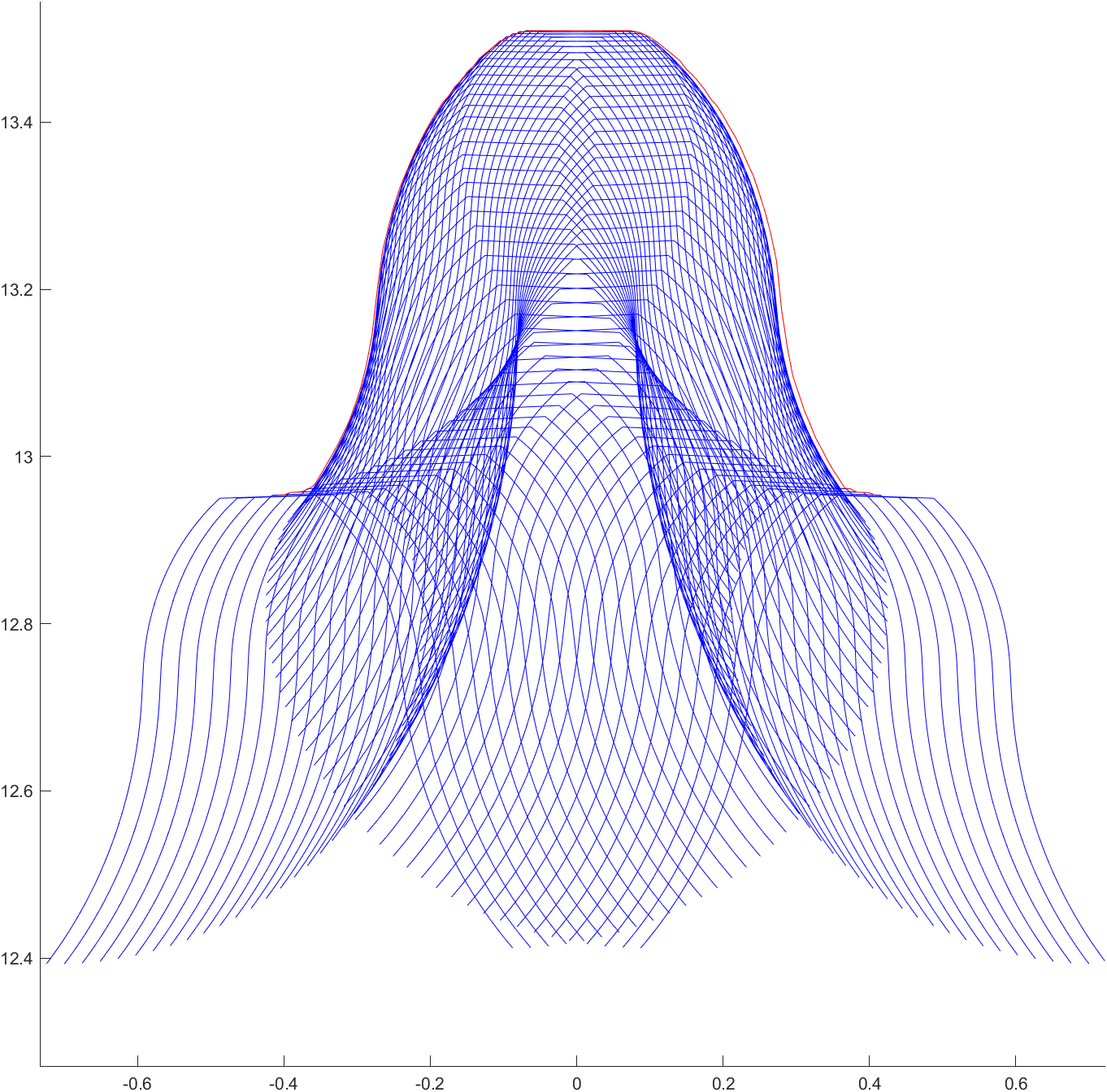

Before committing to a physical prototype, flexspline deformation was modeled in MATLAB — working through how the wave generator drives continuous elliptical deflection through the spline wall, and how that deflection carries into the meshing behaviour with the circular spline. That modeling shaped decisions on wall thickness and tooth profile well before any material was cut or printed.
The first physical iteration used a simple two-roller wave generator, the approach most hobbyist strain-wave projects reach for — it overstressed the flex-spline and failed almost immediately. Moving to a proper elliptical wave generator, with thin-section bearings pressed directly onto the ellipse, did much better: the bearing shields fatigued quickly, but the races have held up well since. From there, the next step was working out proper strain-wave tooth geometry rather than relying on simple involute teeth, which aren't strictly correct for how a flex-spline meshes.
That's roughly where the project stalled. Fine strain-wave tooth geometry pushes FDM printing to its limits — the anisotropy and inhomogeneity in printed parts becomes a real problem at that scale — and the obvious next step, SLA-printed Iglidur resin, was more than the project's budget could justify at the time.
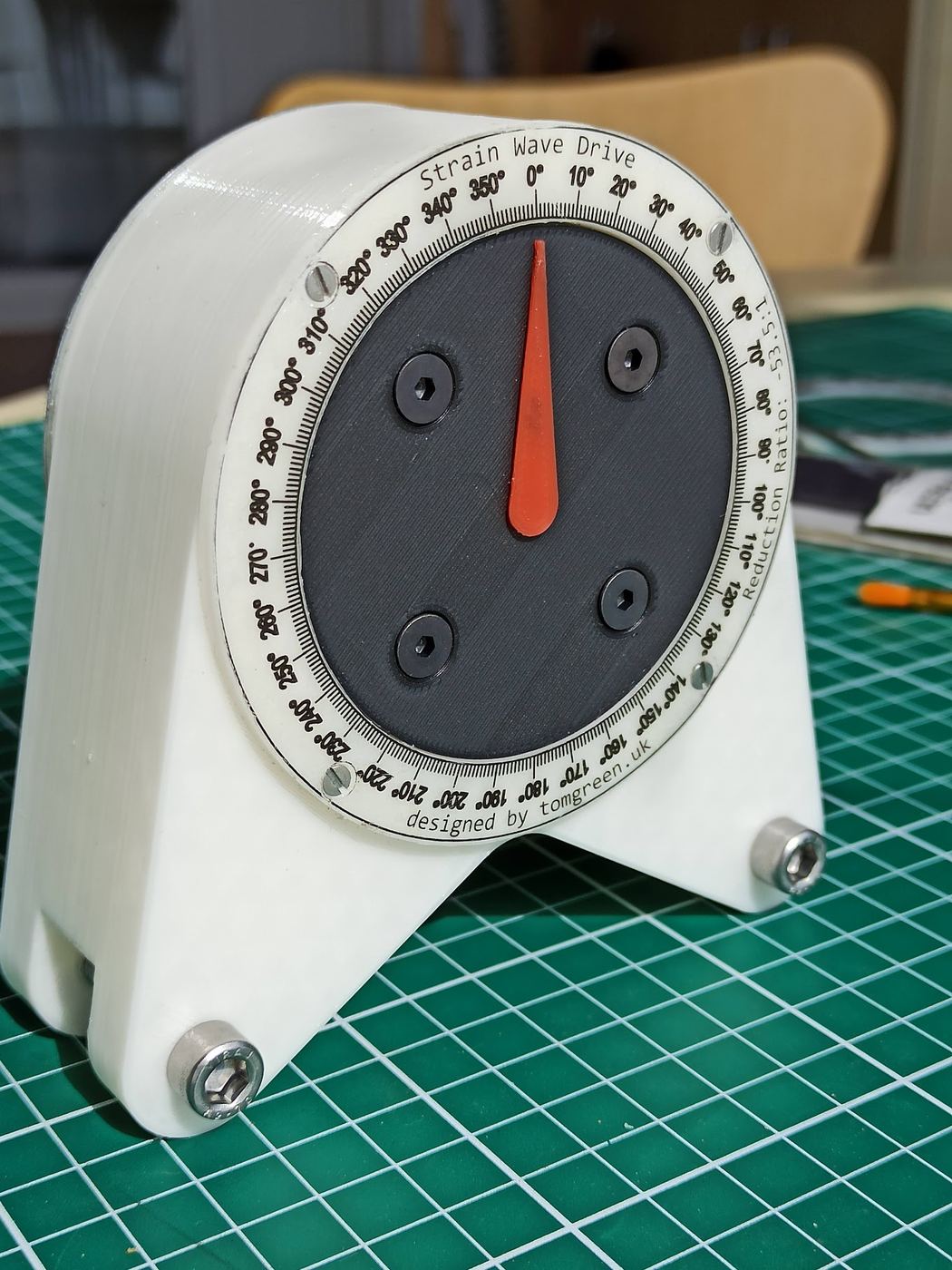
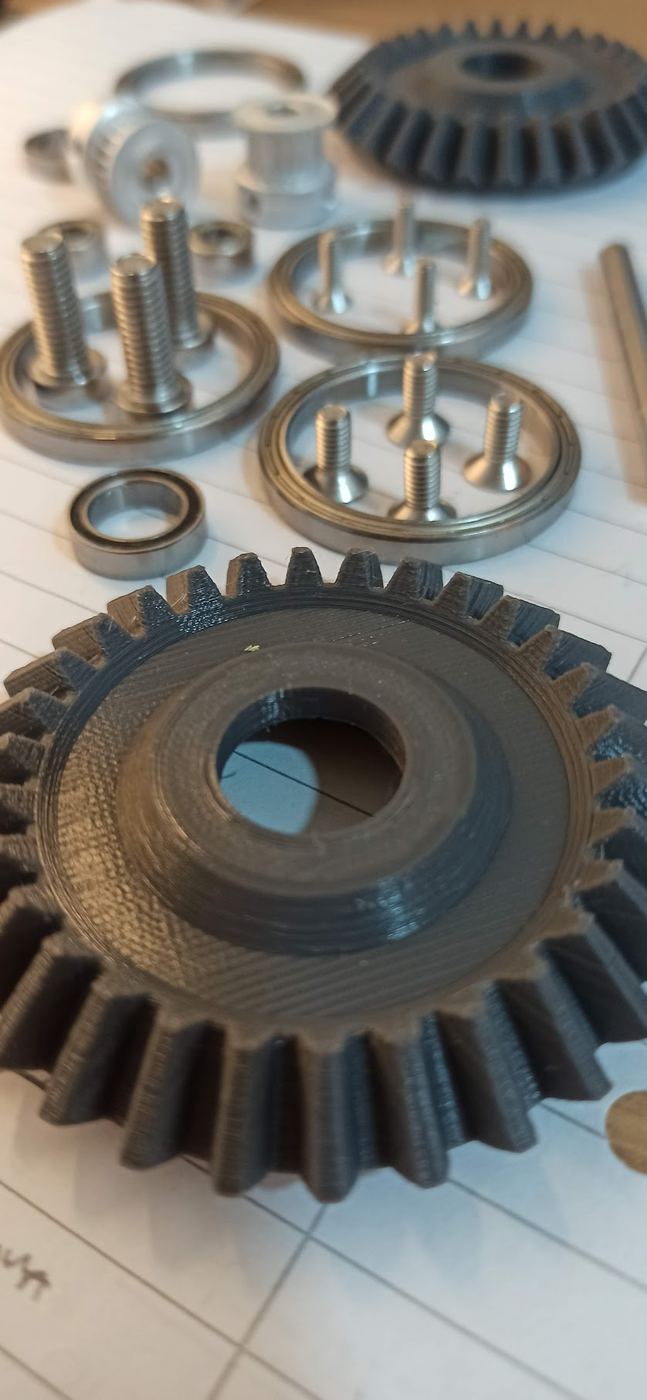
Strain-wave gearing is compact and high-ratio, which makes it a good teaching example — but the mechanism that makes it work, a flexible spline deforming continuously as it meshes with a rigid internal gear, is normally hidden inside a sealed housing. This demonstrator puts that mechanism on display: an open housing and high-contrast components make the flex-spline's motion visible while it's running, and a coaxial dial shows the output rotation relative to the input shaft in real time.
Additive manufacturing made it practical to iterate quickly on tooth profiles and flex-spline geometry before settling on a design and integrating the motor drive electronics. The result is a self-contained, motor-driven teaching model running at a 53.5:1 reduction ratio, letting students watch strain-wave mechanics happen under power rather than working it out from a diagram.
The work also considered whether the flex-spline could be injection moulded in a high-performance polymer such as PEEK. The projected cost and development effort made commercialisation impractical at the time, but the exploration led to university interest and ultimately to this teaching demonstrator.