Bikestow Automation Cell
An automated machining centre that finishes CNC-routed bike rack components — chamfering the reverse face and removing the mousebite tabs left by the primary cutting operation, without operator intervention between parts.
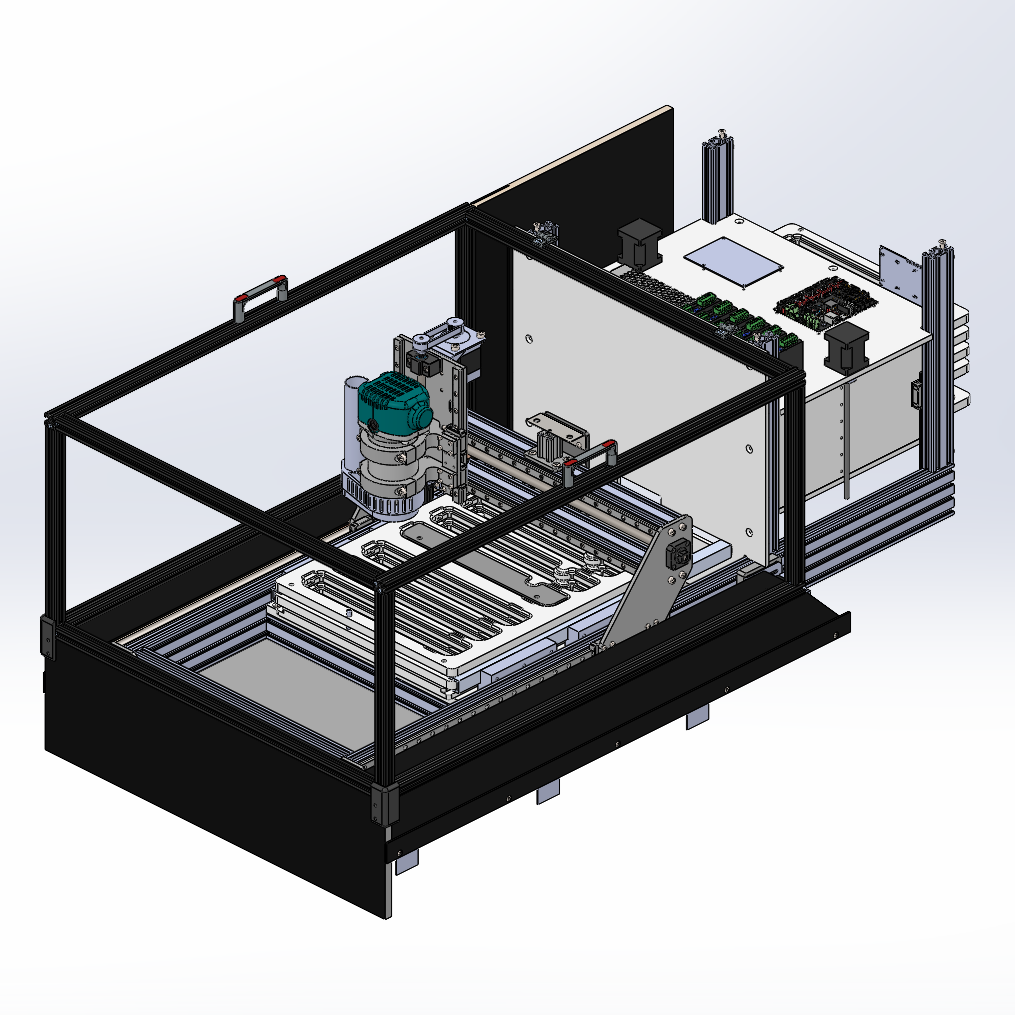
The client's bike rack components are CNC-routed from sheet stock. That process can only chamfer one face of each part — the cutter approaches from above — and leaves small uncut "mousebite" tabs holding each part within the surrounding sheet until it's broken free. Finishing the reverse face and clearing those tabs was being done by hand, on a router table: slow, repetitive work that keeps an operator's hands close to a spinning cutter for the length of a shift.
Mokimo was commissioned to remove that step from the manufacturing process entirely. At its core, Bikestow is a wood router riding an aluminium-extrusion gantry, driven by stepper motors and leadscrews, running the finishing operation autonomously. The more significant engineering is in what surrounds it: how parts are held, how the machine identifies what it's holding, and how it keeps itself fed.
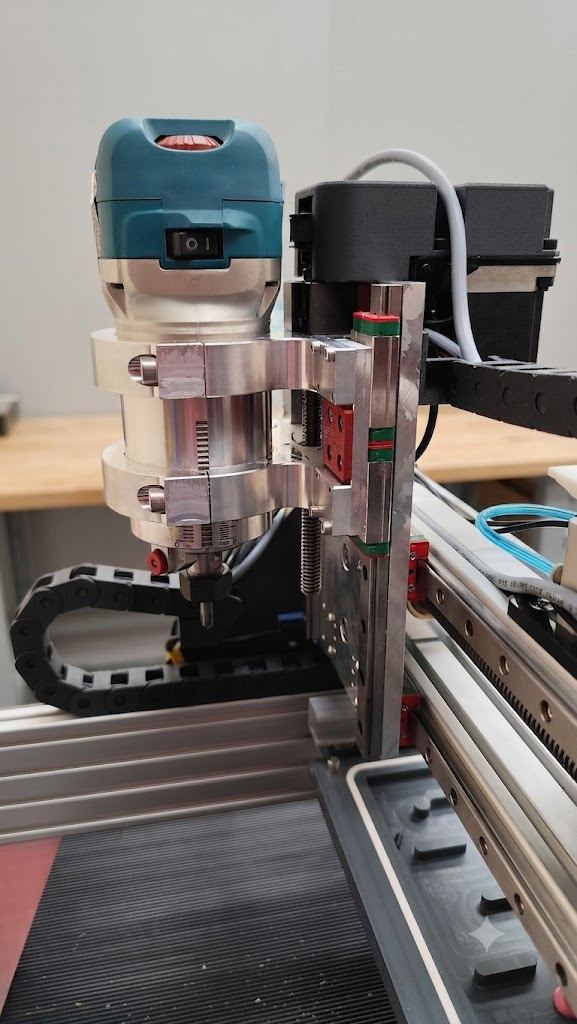
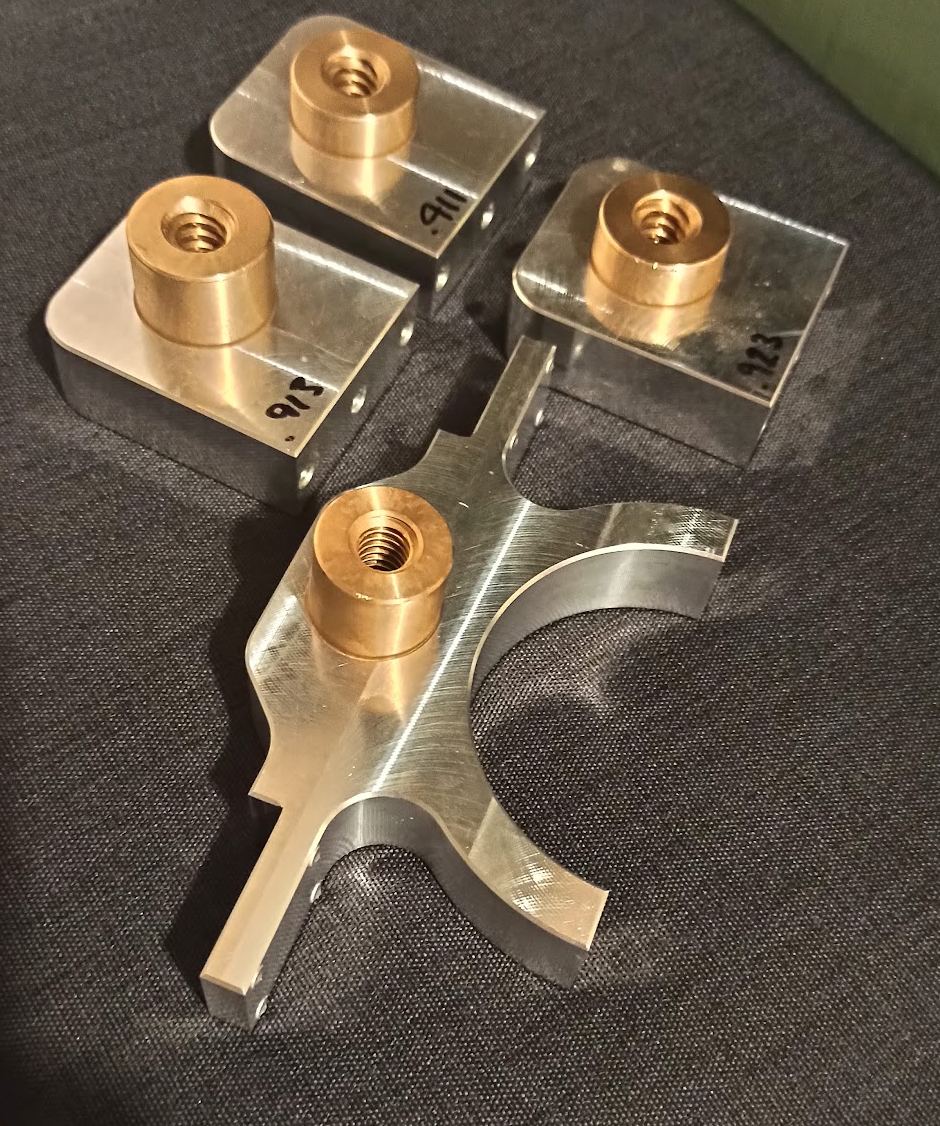
Hold-down is provided by a Henry vacuum cleaner rather than a dedicated vacuum pump — a deliberately pragmatic choice, selected after comparing hold-down pressure across several off-the-shelf units. It clamps each part flat during machining, leaving the entire top perimeter clear for the router rather than obstructing it with mechanical clamps, and counteracts warping in the plywood stock that would otherwise produce inconsistent chamfer depth along longer or flatter parts. The same airflow clears sawdust the on-toolhead dust shoe misses.
Parts are fed through a six-tray magazine, each tray identified by a hall-effect sensor reading a simple magnet array — chosen over optical or mechanical switches, which don't tolerate a dust-heavy environment well. This lets the machine automatically select the correct toolpath from a library of fifteen, matching whatever's loaded without operator input, and makes it effectively impossible to run the wrong programme against a tray. Trays can be swapped as they complete, letting the cell run close to continuously across a full production batch.
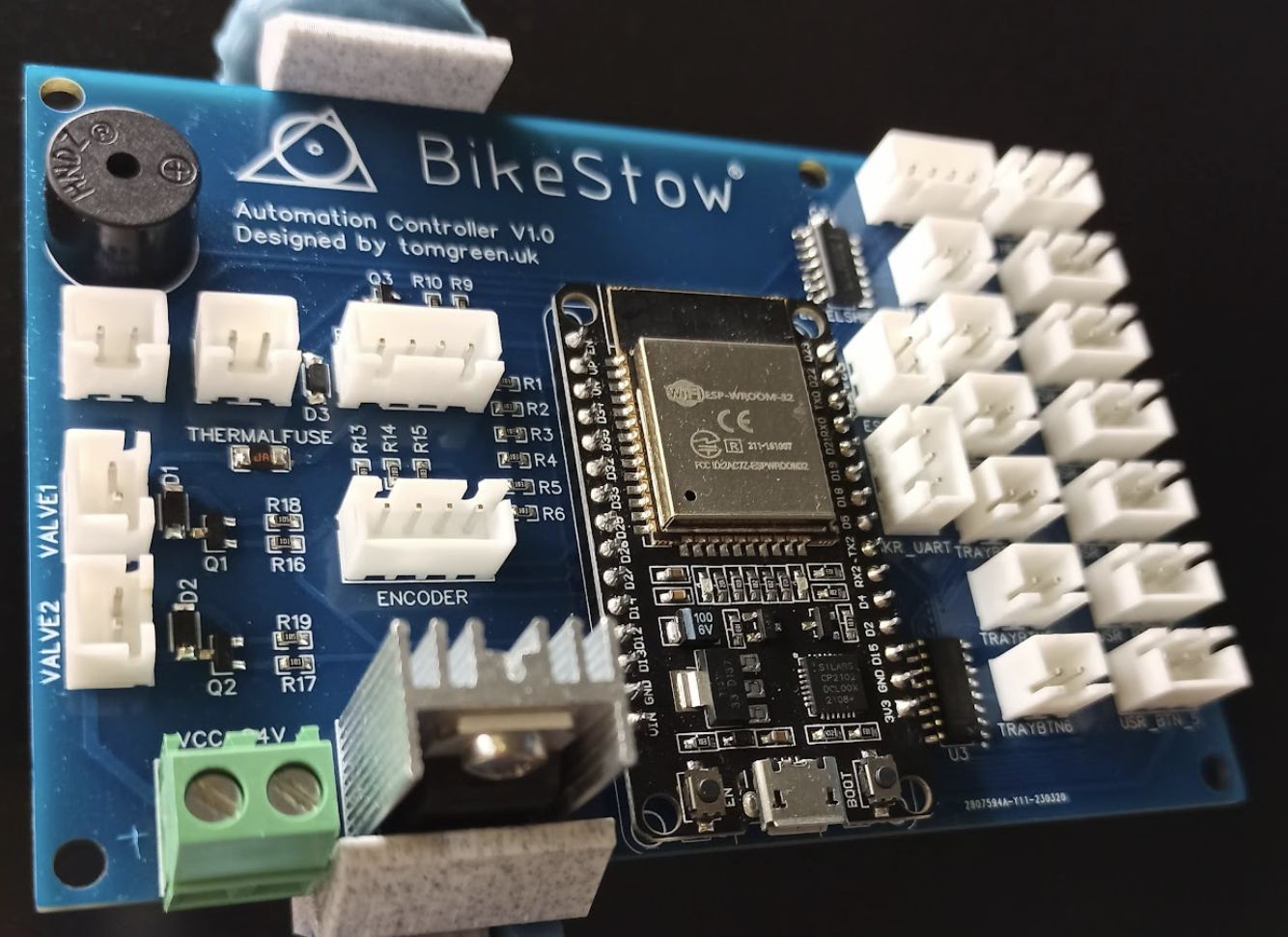
Latches, the movable vacuum bed, and tray alignment are all pneumatically actuated, drawing on the workshop's existing compressed air supply — more robust and faster-acting than the linear steppers or solenoids that would otherwise be required, and more compact.
The cell has been delivered and commissioned in the client's workshop, where it is already producing strong preliminary results. Further integration work is planned to bring it to full production readiness.